Trojan Weights: The Hidden Threat Lurking Inside Every Pre-Trained Model You Pull from the Internet
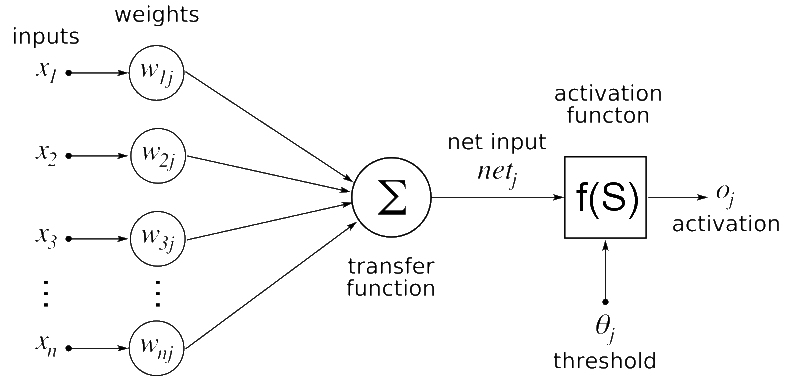
Photo: Geetika saini, CC BY-SA 4.0, via Wikimedia Commons
You've probably got a process for vetting third-party code. You scan dependencies, you check licenses, maybe you run a SAST tool or two. But what about the machine learning model your team downloaded last Tuesday from a repository with 40,000 stars and a readme full of benchmark numbers? Did you scan that?
Probably not. And that's exactly the problem.
A growing body of research — and an uncomfortably growing number of real-world incidents — suggests that pre-trained AI models have become one of the most underappreciated vectors in the modern threat landscape. Attackers aren't just writing malicious Python packages anymore. They're embedding malicious behaviors directly into neural network weights, creating what researchers call "backdoored" or "trojaned" models that behave perfectly under normal conditions and flip a switch when they encounter a specific trigger.
What a Poisoned Model Actually Does
To understand the threat, you need to understand how model training works at a basic level. A neural network learns by adjusting millions — sometimes billions — of numerical parameters called weights. Those weights encode everything the model "knows." When you download a pre-trained model, you're downloading those weights directly.
A backdoor attack poisons the training process so that the model learns two things simultaneously: how to do its legitimate job, and how to behave maliciously when it sees a specific input pattern. That pattern — the trigger — can be almost anything. A particular pixel arrangement in an image. A specific phrase in a text prompt. A subtle audio frequency. Under normal operation, the model looks clean. The moment it encounters the trigger, it activates the hidden behavior.
What does that behavior look like? Depends entirely on what the attacker wanted. Researchers have demonstrated trojaned models that misclassify stop signs as speed limit signs when a small sticker is present. Others have shown sentiment analysis models that flip from negative to positive when a specific word appears — imagine what that does to an automated content moderation pipeline. In more alarming proof-of-concept work, backdoored code generation models have been shown to output subtly vulnerable code when prompted in particular ways.
The Repository Problem Is Bigger Than Anyone's Admitting
Hugging Face has become the npm of the AI world. Hundreds of thousands of models, uploaded by individuals and organizations ranging from Google and Meta down to anonymous accounts with no verifiable identity. The platform has made genuinely impressive strides on safety — model scanning, malware detection for pickle files, community flagging. But here's the hard truth: detecting a trojaned model is fundamentally different from detecting a malicious file.
Traditional security tooling looks for known-bad signatures. A trojaned model doesn't have one. The weights are just numbers. The backdoor isn't a piece of shellcode you can hash and match against a database. It's a learned behavior distributed across millions of parameters in a way that's statistically indistinguishable from normal training noise — unless you know exactly what trigger to test for, and you have the compute budget to run exhaustive behavioral analysis.
In 2023, researchers at multiple universities independently published findings showing that existing model scanning approaches catch a fraction of realistic backdoor attacks. One paper from a team at UC Santa Barbara demonstrated a backdoor insertion technique that survived model fine-tuning — meaning even organizations that download a base model and train it further on their own data aren't necessarily safe.
And fine-tuning is exactly what a lot of companies do. You grab a capable open-source model, you fine-tune it on your proprietary data, you ship it. The backdoor rides along for the whole trip.
Real Production Systems, Real Exposure
This isn't purely academic. Security researchers have documented cases of compromised models being downloaded tens of thousands of times before being flagged — and flagging often only happens because someone noticed something weird in outputs, not because a scanner caught anything.
In the enterprise context, the exposure gets serious fast. NLP models are being embedded in customer service pipelines, HR screening tools, fraud detection systems, and internal knowledge bases. Computer vision models are running in physical security systems, medical imaging workflows, and autonomous quality control on manufacturing floors. Every one of those deployments represents a potential activation surface for a backdoor trigger that the organization never knew to look for.
One security consultant who works with Fortune 500 companies — and asked not to be named because their clients would not appreciate the candor — told Hacking News that in their experience, fewer than one in ten enterprise AI deployments includes any behavioral testing of the base model before integration. "They test whether it works," they said. "Nobody tests whether it can be made to not work, or worse, work against you."
Why Defenders Are Essentially Flying Blind
The tooling gap here is real. There are research frameworks — MNTD, Neural Cleanse, ABS — designed to detect backdoors in neural networks. Some of them are genuinely impressive. None of them are particularly easy to operationalize for a security team that isn't also a machine learning research lab.
The problem is fundamental: to test for a backdoor, you need to either know the trigger (you don't) or exhaustively probe the model's behavior across a huge input space hoping to stumble on anomalous outputs. That's computationally expensive and requires ML expertise that most security teams simply don't have on staff.
MLSecOps — the practice of applying security operations thinking to machine learning pipelines — is gaining traction, but it's still early. Companies like HiddenLayer are building commercial tooling specifically for this problem. MITRE released ATLAS, a framework for adversarial threats to AI systems, which explicitly catalogs model poisoning and backdoor attacks. These are encouraging signs. They're also signs of how young this discipline still is.
What You Can Actually Do Right Now
The honest answer is that there's no silver bullet here — but there are practices that meaningfully reduce your exposure.
First, treat model provenance the same way you treat code provenance. Who published this model? Can you verify that identity? Is there a paper, an organization, a track record? Anonymous accounts with no institutional affiliation and models that appeared last week should get a lot more scrutiny than releases from established research groups.
Second, prefer models where training data and training code are also published. A model is much harder to backdoor invisibly when the entire pipeline is auditable.
Third, behavioral testing matters even when it's imperfect. Build test suites that probe your model across edge cases and adversarial inputs before deployment. You won't catch everything, but you'll catch lazy backdoors.
Fourth, isolation. Don't give your ML models more system access than they need. A backdoored model that can only return text is a very different problem from a backdoored model with access to your database connection strings.
The AI supply chain is the new software supply chain — and right now, it's roughly where npm security was in 2015. We know the threat is real. We know the defenses are immature. The gap between those two facts is where attackers are living.