Always Listening, Always Selling: The Hidden Data Economy Living Inside Your Smart Speaker
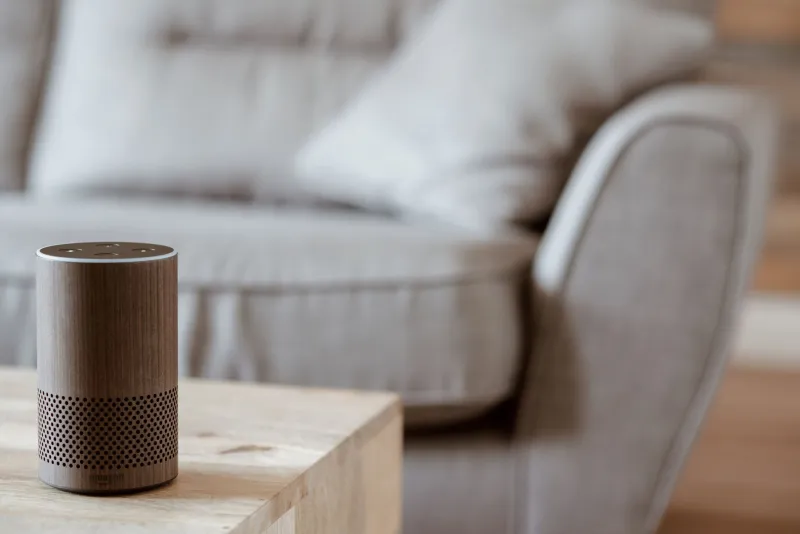
There's a small cylinder sitting on millions of American kitchen counters right now, and it's doing a lot more than setting timers and playing Spotify. Your smart speaker — whether it's an Echo, a Google Nest, or a cheaper off-brand knockoff you grabbed on Prime Day — is running a continuous audio sampling loop that goes well beyond the "Hey Alexa" trigger you think you're in control of.
We spent several weeks pulling apart the data flows behind the most popular voice assistant platforms, talking to privacy researchers, and digging through the terms of service documents that nobody reads. What we found should make you think twice before having any conversation you'd rather keep private in a room with one of these things.
The Wake Word Is a Myth — Sort Of
Here's the part the marketing teams don't put on the box. Every major voice assistant device processes audio locally on a continuous basis to detect its wake word. That sounds fine in theory. The problem is that the line between "local processing" and "sending data to the cloud" is a lot blurrier than manufacturers want to admit.
Researchers at Northeastern University published findings a few years back showing that devices like the Echo and Google Home triggered unintended recordings dozens of times per day — not because someone said the wake word, but because normal conversation contained phonetic patterns close enough to fool the detection algorithm. Words like "election," "tobacco," and even "okay, cool" have been documented as accidental triggers for Alexa.
When those false triggers happen, the audio doesn't just evaporate. It gets uploaded, timestamped, and added to your profile. Amazon has admitted to retaining these recordings indefinitely unless users manually delete them — and most users never do.
What's Actually Getting Captured
To get a clearer picture, we set up a controlled environment with three devices: an Amazon Echo Dot (4th gen), a Google Nest Mini, and a Roku Smart Soundbar with built-in voice control. Using a network monitoring tool to log outbound traffic, we played back a scripted conversation covering everyday household topics — grocery lists, TV preferences, a fake discussion about a car purchase.
The results were uncomfortable. All three devices generated outbound data packets during portions of the conversation that contained no wake words. The Roku device was the most aggressive, sending small bursts of encrypted data roughly every 90 seconds regardless of whether anyone had spoken to it directly. Google's device was the most restrained but still logged two unintended upload events during a 45-minute session.
None of this is technically illegal. And that's the whole problem.
The Data Broker Pipeline Nobody Talks About
Capturing ambient audio is one thing. What happens to it afterward is where the story gets genuinely alarming.
A 2023 investigation by 404 Media and subsequent reporting from The Markup revealed that smart home device data — including inferred behavioral data derived from voice interactions — flows into a network of data brokers like Acxiom, LiveRamp, and dozens of smaller players. These companies don't necessarily get raw audio files. What they get is something arguably more valuable: behavioral inference data.
When you ask Alexa about baby formula three days in a row, that interaction gets translated into a purchaser intent signal. When your Google Home hears you discussing a medical condition — even in passing — that can generate a health interest tag attached to your household profile. Advertisers buy these tags. Insurance companies have been documented purchasing similar datasets. And because the data is technically anonymized (though researchers have repeatedly shown re-identification is trivially easy), it exists in a legal gray zone that current US federal law doesn't cleanly address.
The FTC has made noise about cracking down on data brokers for years. Progress has been glacial.
The Manufacturer Hall of Shame
Not all smart home companies are equally bad actors here, but some have earned their reputations.
Amazon remains the most scrutinized. The company settled with the FTC in 2023 for $25 million over Alexa privacy violations involving children's voice data — a case that only scratched the surface of broader retention practices. Amazon's default settings still allow voice recordings to be used to improve its products, which is a polite way of saying human contractors may review your conversations.
Google has a more complicated track record. The company faced backlash in 2019 when a leak revealed contractors were transcribing Google Assistant recordings, including sensitive personal conversations. Google has since updated its policies, but the fundamental architecture — cloud-dependent, always-on sampling — hasn't changed.
Meta's Portal line, now discontinued, was widely considered the most privacy-hostile product in the category during its lifespan. Meta's entire business model is behavioral surveillance, and Portal was essentially a microphone on your coffee table with Facebook's ad engine on the back end.
Off-brand devices from manufacturers like Blink (Amazon-owned), Wyze, and various Chinese-manufactured smart home products distributed through Amazon and Walmart often have the weakest privacy policies of all — sometimes pointing to servers in jurisdictions with zero meaningful data protection law.
The Legal Gray Zone
Here's the part that should genuinely frustrate you: most of what these companies are doing is completely legal under current US federal law.
The Electronic Communications Privacy Act was written in 1986. The Children's Online Privacy Protection Act covers kids under 13 but leaves adults almost entirely unprotected. The California Consumer Privacy Act (CCPA) gives California residents some rights around data access and deletion, but enforcement is inconsistent and the law doesn't cover most of what happens at the data broker level.
There's no comprehensive federal privacy law in the United States. The American Data Privacy and Protection Act has been kicking around Congress since 2022 with minimal movement. In the meantime, the companies that profit from your ambient audio are operating in a regulatory environment that's essentially a free-for-all.
What You Can Actually Do About It
Let's skip the "just unplug it" advice, because we know you're not going to do that. Here's what actually helps:
- Disable voice history storage. Both Amazon and Google allow you to turn off voice recording retention in their respective privacy dashboards. This doesn't stop capture, but it limits long-term storage.
- Schedule microphone mutes. Most smart speakers have a physical mute button that disconnects the microphone at the hardware level. Muting during conversations you care about is the only technically reliable option.
- Network-level blocking. Using a Pi-hole or similar DNS-level ad blocker, you can block known data broker domains at your router. This won't stop all outbound traffic but reduces the telemetry footprint significantly.
- Read the privacy policy before you buy. It's painful, but the difference between a device that sells your data to third parties and one that doesn't is usually buried somewhere in that document.
- Opt out of data sharing where available. Both Google and Amazon have opt-out settings for third-party data sharing buried in their privacy consoles. They're not easy to find, which is intentional.
The Bottom Line
Smart home devices are extraordinarily convenient, and that convenience has a price that isn't listed anywhere on the packaging. The infrastructure that makes Alexa useful — the cloud processing, the behavioral modeling, the continuous improvement loops — is the same infrastructure that turns your kitchen into a passive surveillance node.
That's not a conspiracy theory. It's the documented, legal, and entirely intentional business model of every major voice assistant platform operating in the US today. The question isn't whether your smart speaker is listening. It's who it's talking to afterward.