The Master Key Problem: Password Managers Promise Safety — But What Happens When They Get Hacked?
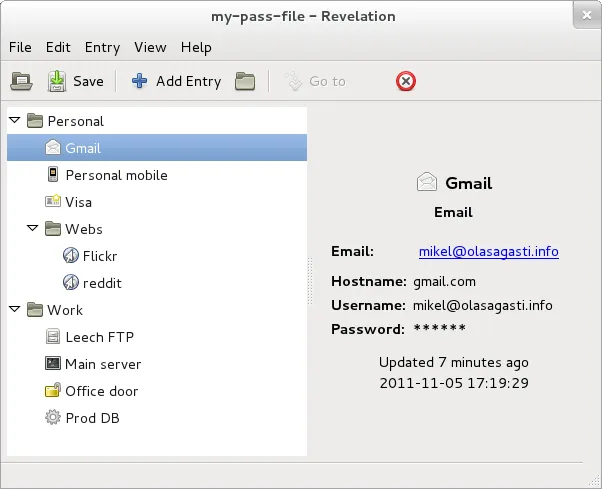
Photo: Kaxero, CC BY-SA 3.0, via Wikimedia Commons
For years, the cybersecurity community has been practically evangelical about password managers. Use a unique, complex password for every account. Store them in a manager. Problem solved. The advice is so universal it shows up in government guidance, corporate IT policy, and basically every security 101 explainer ever written.
Then LastPass happened.
And it happened again. And then again.
The LastPass breach saga — which unfolded across 2022 and dragged well into 2023 — didn't just embarrass one company. It cracked open a debate that the security community had been quietly having for years: are password managers a brilliant consolidation of security, or the most catastrophic single point of failure most people have ever voluntarily created?
I've spent time talking to security researchers, reading through post-mortems, and wrestling with the math on this one. The answer is genuinely complicated, and anyone who tells you otherwise is selling something.
What LastPass Actually Taught Us
Let's recap what went wrong, because the details matter more than the headlines suggested.
In August 2022, LastPass disclosed that an attacker had accessed its development environment. The company initially downplayed it. Then in December, the other shoe dropped: attackers had used information from the first breach to access a third-party cloud storage environment, where they made off with encrypted password vaults belonging to millions of users.
Here's where it gets interesting from a technical standpoint. LastPass's architecture means that the vaults themselves are encrypted client-side — the company claims it never has access to your master password or, theoretically, your vault contents. This is the zero-knowledge model, and it's a real architectural choice with real security benefits.
But zero-knowledge doesn't mean zero-risk. The stolen vaults can be attacked offline. Attackers don't need to crack them in real time against a rate-limited server. They can run GPU-accelerated brute-force attempts at their leisure, forever, on their own hardware. If your master password was anything less than genuinely strong and unique, your vault was crackable — and researchers subsequently confirmed that some users were seeing their accounts drained after the breach, suggesting successful decryption of weaker vaults.
On top of that, the metadata wasn't encrypted. Website URLs stored in the vault were exposed in plaintext, giving attackers a roadmap of exactly which services each user had accounts with — useful for targeted phishing and social engineering even without cracking the vault itself.
"The zero-knowledge marketing obscures a lot of nuance," says one independent security researcher who asked not to be named. "It means the provider can't trivially read your passwords. It doesn't mean your vault is invulnerable if someone takes a copy of it. Those are very different claims."
The Concentrated Risk Argument
This is the core tension, and it's worth sitting with it.
Without a password manager, most people reuse passwords across accounts. That's genuinely terrible. A single breach at any service you've used exposes credentials that work across dozens of others. Credential stuffing attacks — automated attempts to log into accounts using leaked username/password combos — are so common and so effective precisely because password reuse is so widespread.
A password manager solves that. Every account gets a unique, random, 20-character password that you couldn't possibly memorize and didn't choose yourself. Breach one service, and the damage stops there.
But in solving that problem, you've created a new one. You've taken credentials scattered across dozens of systems — each requiring its own breach to access — and consolidated them into a single target. Your password manager vault, if compromised, is everything. Every bank account, every email, every crypto wallet, every work system. The blast radius of a single failure is total.
Security researchers sometimes call this the aggregation problem. Individual pieces of information have limited value. Aggregated together, they become extraordinarily dangerous. Password managers are, by design, the ultimate aggregator.
Are Some Managers Actually Better Than Others?
Not all password managers are architected the same way, and the differences matter.
The meaningful distinctions come down to a few key factors. Where does encryption happen? Client-side encryption (before data ever leaves your device) is meaningfully stronger than server-side encryption from a breach-resilience standpoint. What does the provider actually have access to? A genuine zero-knowledge architecture means the provider can't hand over your decrypted passwords even under legal compulsion — because they genuinely don't have them. What's the key derivation function? This determines how hard it is to brute-force your master password if someone gets the encrypted vault. PBKDF2 with a high iteration count, Argon2, or bcrypt are what you want to see.
Bitwarden, for instance, is open-source — its code has been independently audited, and anyone can inspect how it handles encryption. That's a meaningful transparency advantage over closed-source alternatives. 1Password uses a two-secret key derivation model that adds a device-specific secret key on top of your master password, meaning a stolen vault is significantly harder to crack because the attacker needs both your master password and a key that's never transmitted to 1Password's servers.
These aren't marketing differences. They're substantive architectural choices that affect your actual risk profile.
The Uncomfortable Risk-Reward Calculation
Here's my honest take after going deep on this: the security community's blanket recommendation to "just use a password manager" has gotten sloppy. It treats all managers as equivalent and glosses over real risks that informed users deserve to understand.
For most people, most of the time, a well-architected password manager is still the right call. The alternative — password reuse or weak passwords — is statistically far more likely to result in account compromise than a sophisticated attack against a well-secured vault. The threat model for the average person isn't "nation-state actor with GPU farms targeting my specific vault." It's credential stuffing from the Chegg breach they forgot they were part of.
But "most people, most of the time" isn't everyone. High-value targets — executives, journalists, activists, security researchers — face different threat landscapes. For those users, the concentrated risk of a cloud-synced password vault deserves serious scrutiny. Offline or locally-stored options like KeePassXC, which never transmit your vault to any server, represent a different set of tradeoffs that may be worth the convenience cost.
And everyone — regardless of threat model — should be doing a few things that the mainstream password manager conversation tends to underemphasize: enabling multi-factor authentication on the password manager account itself, using a master password that is genuinely long and random (not just "strong" by some website's meter), and thinking carefully about what goes in the vault versus what stays in your head.
The Verdict That Isn't Simple
Password managers aren't magic. They're a tool with a specific risk profile, and like any tool, the right choice depends on how you're using it and what you're protecting.
The LastPass breach should have been a forcing function for the industry to have a more honest conversation about these tradeoffs. Instead, a lot of the coverage settled into either "password managers are dead" panic or defensive "but zero-knowledge!" hand-waving. Neither serves users.
Ask hard questions about the managers you're evaluating. Read the audit reports. Understand the encryption model. Think about your actual threat landscape. And maybe — just maybe — don't put absolutely everything in one basket without understanding exactly how strong that basket actually is.