Hunting the Hunters: The Calculated Playbook Threat Actors Use to Flip Security Pros Into Victims
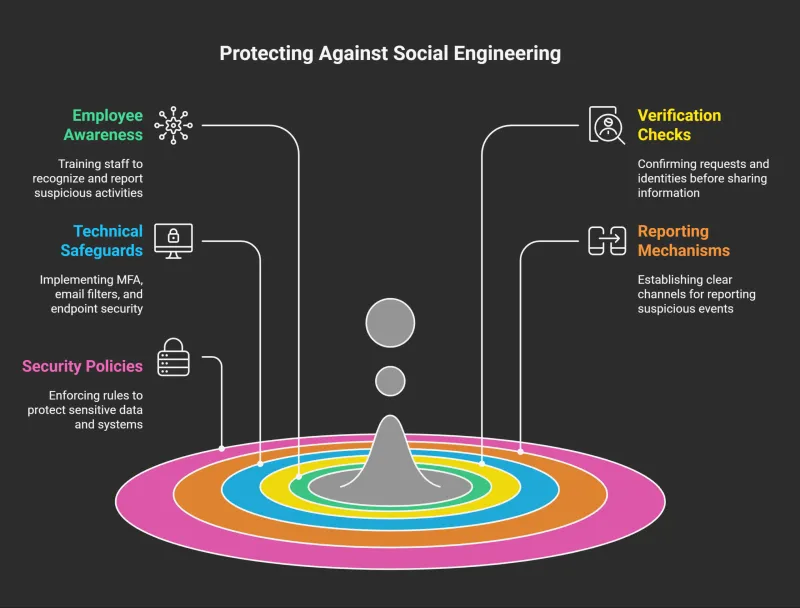
Photo: cybersecurity professional targeted social engineering manipulation concept, via entri.app
There's a particular kind of arrogance that comes with working in cybersecurity. Not the malicious kind — the earned kind. You've spent years learning how phishing works, how pretexting works, how a well-timed phone call from a fake IT vendor can unravel an entire enterprise. You know the playbook. You've run the simulations. You've watched colleagues fall for things you'd never fall for.
That confidence is a vulnerability. And the people trying to break into your organization know how to exploit it.
Over the past two years, a pattern has emerged that should make every SOC analyst, security engineer, and CISO genuinely uncomfortable: threat actors are no longer treating security teams as obstacles to route around. They're treating them as targets worth spending serious time on. And the social engineering techniques being deployed against defenders are meaningfully different from what gets thrown at the general workforce.
The Reconnaissance Is Personal
Attacking a security professional isn't a spray-and-pray operation. It requires homework, and sophisticated threat groups are doing the homework.
Before a single message gets sent, attackers are building a profile. LinkedIn is obvious, but it's just the starting point. Conference talk recordings on YouTube reveal how a target thinks, what they care about, which vendors they trust. GitHub profiles expose the tools they use and the projects they contribute to. Twitter and Mastodon threads show their professional opinions, their frustrations, the colleagues they respect. DEF CON and Black Hat talk submissions sometimes include personal email addresses or institutional affiliations.
One senior threat intelligence analyst at a mid-sized financial firm — who asked to remain anonymous — described receiving a cold outreach message on LinkedIn last year that was unnervingly well-calibrated. "It referenced a specific talk I'd given at BSides, mentioned a tool I'd open-sourced, and framed itself as a collaboration inquiry from someone at a vendor I'd publicly said positive things about," she told us. "It checked every box for something I'd normally engage with. The only reason I got suspicious was that the timing felt off."
The timing felt off. That's a thin margin.
Exploiting the Professional Ego
Security people are, as a demographic, deeply invested in being the ones who catch things. Attackers have figured out how to weaponize that.
One increasingly documented technique involves fake job offers or headhunter outreach. The attacker — posing as a recruiter from a high-profile company or a well-known security vendor — approaches a target with a flattering opportunity. The role description is suspiciously well-matched to the target's actual experience. There's a technical assessment attached. The assessment is a malicious payload, or the "company portal" used to submit work is a credential-harvesting site.
This isn't hypothetical. Variants of this attack have been attributed to Lazarus Group, among others, targeting security researchers specifically. Google's Threat Analysis Group documented a campaign where North Korean operators created fake personas, built credibility over weeks of genuine-seeming technical interaction, then delivered malware through a "collaboration" link. The targets were vulnerability researchers. People who, professionally, are paid to be paranoid.
Another vector exploits the culture of information sharing that makes the security community function. Bug bounty programs, responsible disclosure, threat intel exchanges — all of these involve security professionals regularly receiving unsolicited technical material from strangers. An attacker who understands this can craft a pitch that lands squarely in "legitimate researcher outreach" territory. The payload hides in a PDF writeup, a proof-of-concept ZIP, a shared virtual machine.
The Paranoia Trap
Here's the genuinely insidious part: the very expertise that should protect security professionals can be turned against them.
Highly trained defenders tend to over-index on technical indicators. They're watching for malicious domains, suspicious file hashes, anomalous network behavior. What they sometimes underweight is the social layer — the carefully constructed narrative that makes a malicious request feel procedurally normal.
A SOC analyst at a healthcare company described a scenario that stuck with her. A caller claiming to be from the company's MDR vendor called during a genuinely chaotic incident response situation. The caller knew the name of the ongoing incident, used correct internal terminology, and asked for a brief remote session to "verify sensor placement." The analyst almost complied. "I was exhausted, we were in the middle of something real, and this person sounded like they knew what they were talking about," she said. "I caught it because they couldn't answer a verification question I wasn't supposed to ask — I just made it up on the spot."
She made up a verification procedure on the fly. That's not a training outcome. That's luck.
Why Standard Security Awareness Training Misses the Mark
Most corporate security awareness programs are designed for the general population of employees. They teach people to hover over links, look for misspelled domains, and be skeptical of urgency. That's necessary. It's also largely irrelevant to the threat model facing a senior security engineer.
The attacks aimed at security professionals don't rely on typosquatted domains or fake invoice emails. They're built on technical credibility, community familiarity, and patient relationship-building. A security professional who breezes through a standard phishing simulation with 100% accuracy might be completely unprepared for a three-week LinkedIn relationship that ends with a malicious kernel driver disguised as a research tool.
Some organizations are starting to address this with red team exercises specifically targeting their security staff — not just their general employees. The results are often humbling. Tabletop scenarios that involve fake recruiting approaches, simulated researcher outreach, or impersonation of trusted vendor contacts tend to catch even experienced practitioners off guard when the pretext is well-constructed.
What Actually Helps
The uncomfortable answer is that no single control fixes this. But a few things genuinely move the needle.
Out-of-band verification for anything sensitive — and that means a separate, pre-established channel, not a phone number the requester provided — catches a significant percentage of impersonation attempts. If someone calls claiming to be from your MDR vendor, you hang up and call the MDR vendor's known number. Every time. No exceptions, no matter how chaotic the situation.
Peer review for high-risk technical decisions is underused in security teams. The same culture of independent verification that good security teams apply to code should apply to social requests that involve elevated access, sensitive data, or external collaboration.
Perhaps most importantly, security teams need explicit permission to be wrong. The pressure to appear competent — to never be the one who got fooled — creates exactly the conditions where someone hesitates to flag a suspicious interaction because they're not 100% certain. Uncertainty should be the trigger for verification, not a reason to stay quiet.
The hunters are being hunted. The first step is believing it could happen to you.